SellWine — UI/UX & Web Development
Wine told before sold.
- Client
- SellWine
- Sector
- Food & Beverage · Wine eCommerce
- Market
- CH + abroad
- Year
- 2025
- Services
- UI/UX & Web DevelopmentContent ProductionAdvertising, Marketing & Strategy
- Website
- sellwine.ch
SellWine was selling premium wine on a Magento platform that had stopped moving. We accompanied the migration to Shopify, built a four-language ecommerce, fed an editorial blog of over seventy articles and switched on measurable ADS campaigns supported by email automations. A case where the budget went where the numbers said to go: content marketing that compounds, tracked ADS, an automated funnel.
The wine was ready, the ecommerce was not.
SellWine is an online boutique of Swiss and Italian wines: curated selection, six partner wineries, a focus on Ticino Merlot and on labels hard to find elsewhere. The wine was there, the platform it was sold on was not: Magento in an obsolete version, slow, expensive to maintain, with a dated user experience that throttled conversion. Almost no organic social presence, no structured advertising investment, no editorial storytelling around the product. The goal was to rebuild the digital experience starting from the right platform, build a content ecosystem that gave depth to the brand and switch on measurable campaigns instead of spending on instinct.
Magento to Shopify, and everything else cascading from there.
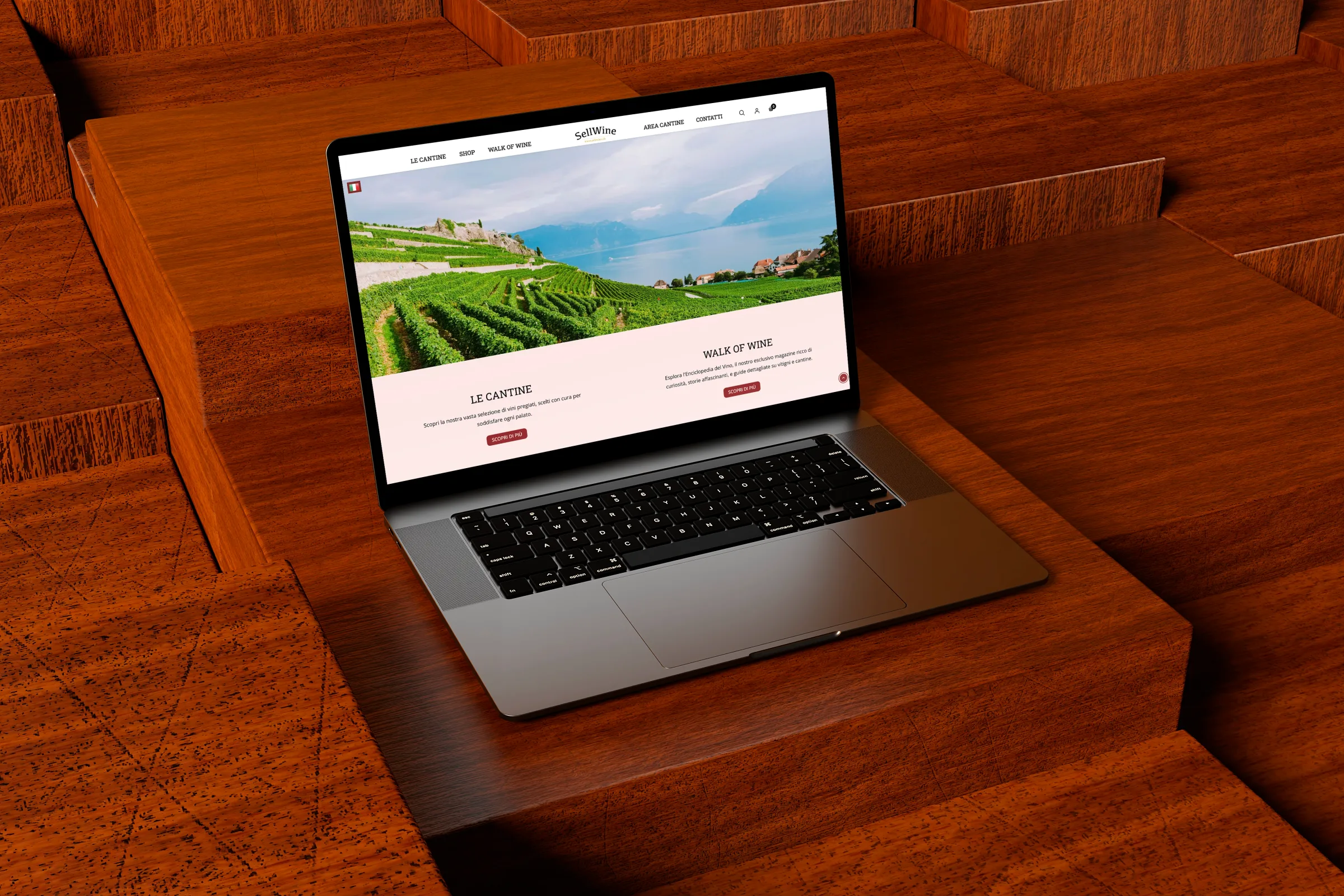
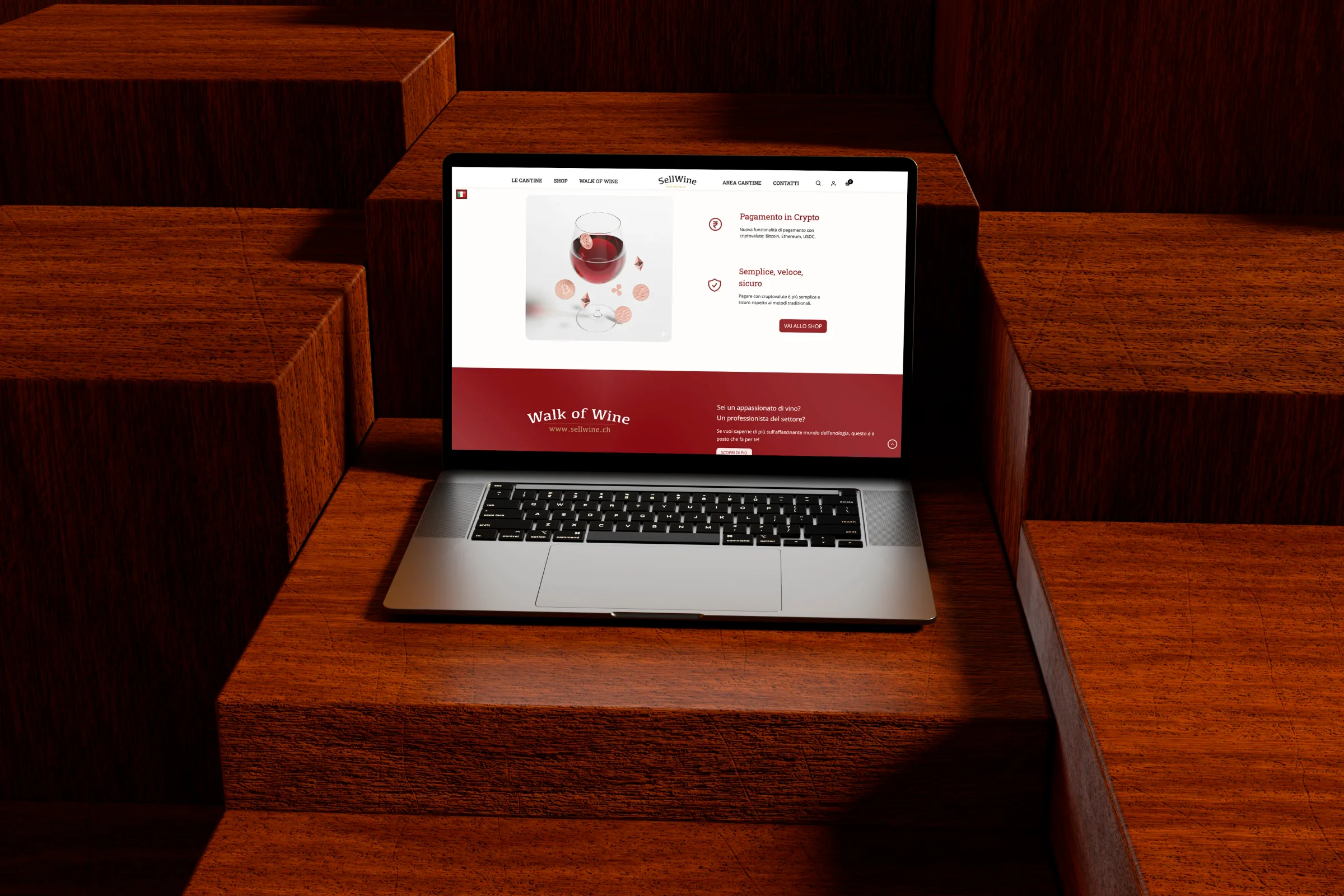
Platform first: a full migration from Magento to Shopify, catalogue, customers, order history, SEO and redirects, one week of technical work. On top of it we built a four-language ecommerce handled natively in Shopify, Italian, English, German and French, with fluid navigation across IT, EN, DE and FR and commercial and editorial content separated but linked. To that were added checkout, card, TWINT and cryptocurrency payments and a shipping system designed for the Swiss and international market. The site is organised around six partner winery collections, Tenuta Castello di Morcote, Bisson, Baretta, Castelnuovo del Garda, Tre Donne and Azienda Agricola Bianchi, plus dedicated sections for selected boxes, gift cards and experiences, with a page for every wine carrying narrative, pairings and technical data, not just price and quantity. In parallel: analytics setup with GA4, Meta Pixel and conversion events, ADS campaigns with end-to-end tracking and audiences segmented by market and language, a lead generation funnel built on mailing list, cart recovery, post-purchase automations and email sequences, a Facebook and Instagram social calendar with editorial creatives, and the Walk of Wine blog, over seventy articles published, from Ticino Merlot to Chianti symbolism, from Swiss viticulture to food pairings.

A wine ecommerce is not a catalogue: it is a reading guide. If you treat the product as a bottle with a barcode, you sell to those who already know what they want. If you tell its story, you sell to those who are still discovering.
Outsmart Team

Budget where the data points.
After the first months the organic social budget was reallocated to the three channels the data pointed to: editorial blog, tracked ADS and email automations. The social graphics produced at the start remain as reserve assets for seasonality, new winery launches and regional events.
The project in numbers
01Why migrate an ecommerce from Magento to Shopify?
Because Magento requires constant technical maintenance, high server costs and long development times for every change. Shopify offers managed infrastructure, a mature app ecosystem, solid out-of-the-box performance and a more predictable total cost of ownership. For a wine ecommerce with a mid-sized catalogue and international ambition, it is the sensible choice.
02For a premium wine ecommerce, is it better to invest in organic social or in content marketing?
It depends on the product, but for premium wine content marketing tends to win. An evergreen article on a grape variety or a food pairing keeps bringing qualified traffic for years; an organic Instagram post lives 48 hours. On SellWine the data confirmed the hypothesis: the Walk of Wine blog, measurable ADS and email automations return more solid ROI, so the budget went there. Social remains a useful tool for specific occasions (launches, seasonality, events), not as an always-on channel for this segment.
03How do you set up a multilingual wine ecommerce?
On Shopify, through the native markets and languages system (Shopify Markets). You configure a language for each target market, translate catalogue and collections, separate taxation and shipping by region. The user experience is consistent across IT, EN, DE and FR, but every market sees pricing and content built for its context.
04What is an editorial blog like Walk of Wine for in an ecommerce?
It intercepts those searching for information before searching for a product. An article on Ticino Merlot or food pairings brings qualified traffic from organic search, positions the brand as a source of authority in its segment and converts readers into customers over time. It is a long bet but it is the most solid SEO pillar a cultural-product ecommerce can build.
See the project live